
Why Your Kid Won’t Talk to You (and 5 Ways to Change That Without Forcing It)
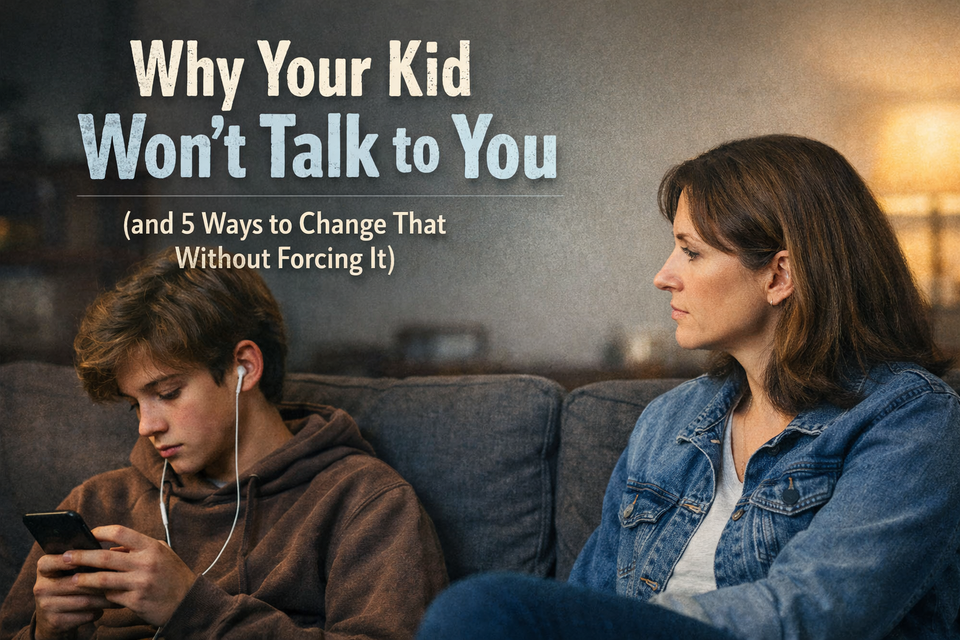
(and 5 Ways to Change That Without Forcing It)
There’s a moment many parents hit—and it’s not loud or dramatic.
It’s quiet.
You ask how their day was.
“Fine.”
You try again.
“Good.”
And just like that… the conversation is over.
But inside, it doesn’t feel small at all.
It feels like something is slipping.
It’s Not That They Don’t Want to Talk
This is the part that’s easy to misunderstand.
When kids stop talking, it’s rarely because they don’t want connection.
It’s usually because something about talking doesn’t feel safe, easy, or worth the effort anymore.
That shift can happen for a lot of reasons:
- They feel judged (even unintentionally)
- They don’t want a lecture
- They’re overwhelmed and don’t know how to explain it
- They’re trying to figure things out on their own
- Or they just don’t have the energy to “process out loud”
And the more we push… the more they pull back.
The Trap Most Parents Fall Into
When communication drops, instinct kicks in.
We try harder:
- More questions
- More reminders
- More “talk to me” moments
But to them, it can feel like pressure.
And pressure doesn’t open doors—it closes them.
5 Ways to Rebuild Communication (Without Forcing It)
These aren’t quick fixes.
They’re small shifts that create space for connection to come back naturally.
1. Stop Asking So Many Direct Questions
Questions like:
- “How was school?”
- “What’s wrong?”
- “Why are you upset?”
…can feel like work to answer.
Instead, try:
- Observations: “You seemed kind of quiet tonight.”
- Low-pressure comments: “That sounded like a long day.”
This invites conversation without demanding it.
2. Talk Side-by-Side, Not Face-to-Face
Some of the best conversations don’t happen at the dinner table.
They happen:
- In the car
- While walking
- Watching something together
- Doing a task side-by-side
When there’s less eye contact and pressure, kids often open up more.
3. Resist the Urge to Fix Everything
This one is hard.
When they do talk, it’s tempting to:
- Offer solutions
- Give advice
- Jump into “parent mode”
But sometimes what they need is simple:
Someone to hear them… without turning it into a lesson.
Try:
- “That sounds really frustrating.”
- “I get why that bothered you.”
Connection first. Solutions later.
4. Be Available at Unexpected Times
Kids rarely open up on schedule.
It might be:
- Late at night
- Right before bed
- When you’re about to walk out the door
These moments can feel inconvenient—but they matter.
Being willing to pause sends a powerful message:
“You matter more than my timing.”
5. Focus on Connection Outside of Conversations
Talking isn’t the only way kids feel close.
Sometimes connection looks like:
- Sitting in the same room
- Sharing a laugh
- Doing something simple together
When connection is strong, conversation often follows.
Not the other way around.
The Part No One Talks About
This phase can feel personal.
Like:
- “Did I do something wrong?”
- “Why don’t they trust me?”
- “We used to be so close…”
But distance is often part of growing up.
It’s not always a sign something is broken.
Sometimes it just means the relationship is changing.
Stay Open Anyway
You don’t need the perfect words.
You don’t need to force deep conversations.
What matters most is this:
- Staying present
- Staying patient
- Staying open
Even when they’re quiet.
Because the goal isn’t to make them talk.
It’s to make sure they know…
When they’re ready, you’re still there.
Final Thought
If your child isn’t talking much right now, you’re not alone.
And this doesn’t mean you’re losing them.
It might just mean they’re figuring out who they are—and how to come back to you in a new way.
And when they do…
The way you showed up during the quiet moments will matter more than anything you said.