
Meal Planning for Busy Families: A Realistic Weekly System That Reduces Dinner Stress
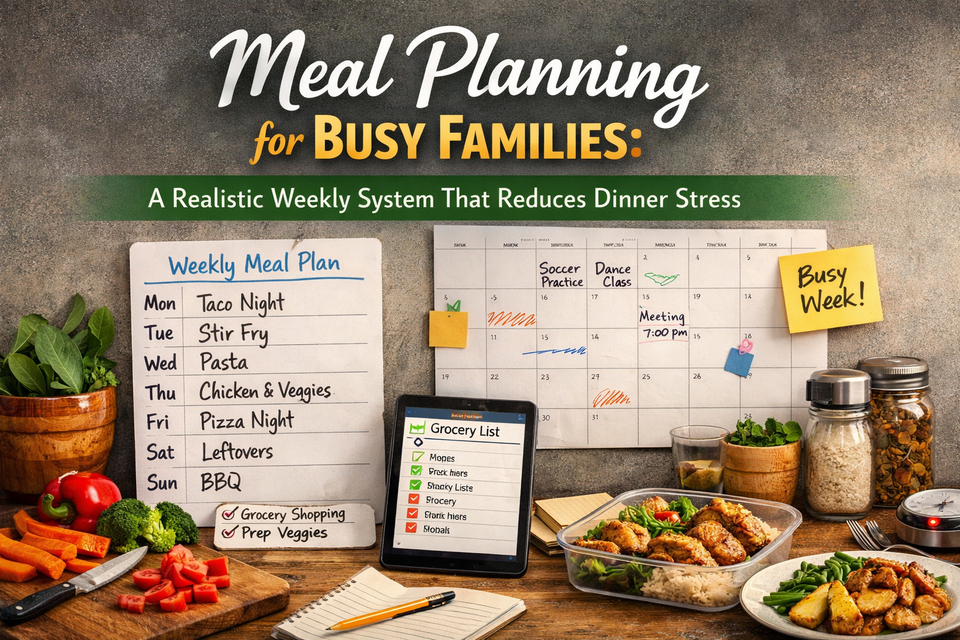
If your family tends to hit 5:15 p.m. and suddenly realize no one knows what’s for dinner, you are not failing. You are living in a busy house.
Between work, school, activities, homework, errands, and the general mental load of keeping everyone fed, dinner can start to feel like a daily pop quiz you forgot to study for. And for a lot of parents, the problem is not cooking itself. It’s deciding. Over and over again.
The good news is that meal planning does not have to mean color-coded spreadsheets, complicated prep sessions, or cooking from scratch every night. For most busy families, a simple system works better than an ambitious one.
The goal is not to become the kind of parent who serves perfect dinners seven nights a week. The goal is to reduce stress, make fewer last-minute decisions, and get a decent meal on the table more consistently.
Why dinner feels so hard on weeknights
Weeknight dinner usually falls apart for predictable reasons:
- Everyone gets home at different times
- Energy is lowest right when dinner needs to happen
- Ingredients are missing or forgotten
- Kids may or may not like what you planned
- The parent carrying the meal load is tired of being the default decision-maker
That is exactly why a realistic meal planning routine helps. It does not eliminate busy evenings, but it gives you a fallback when your brain is already done for the day.
The realistic goal: fewer decisions, not perfect meals
A lot of meal planning advice quietly assumes you have time to prep all weekend, enjoy trying new recipes, and can predict the week without surprises. Most families cannot.
A better goal is this: make dinner easier by deciding the basics ahead of time.
That means:
- Planning 5 or 6 dinners, not 7
- Repeating familiar meals often
- Using convenience foods when needed
- Leaving space for leftovers, takeout, or fend-for-yourself nights
- Accepting that “good enough” is often exactly what your week needs
Real Talk: some of the best family meal systems are a little boring. That is not a failure. That is what makes them sustainable.
A low-effort weekly meal planning system
Here is a simple system you can do in about 15 to 20 minutes once a week.
Step 1: Check your week before you plan food
Before choosing meals, look at the calendar.
Ask:
- Which nights are packed?
- Which night will everyone be home later than usual?
- Is there one evening when cooking a real meal feels more doable?
- Is there a night that should clearly be leftovers, frozen pizza, or sandwiches?
Your schedule should shape the menu. Not the other way around.
Example:
- Monday: sports practice, late evening -> slow cooker or super fast meal
- Tuesday: everyone home -> normal dinner
- Wednesday: parent working late -> leftovers or breakfast for dinner
- Thursday: busy but manageable -> sheet pan meal
- Friday: low energy -> takeout or easy family favorite
This one step alone can prevent the classic mistake of assigning an ambitious recipe to your most chaotic night.
Step 2: Use meal categories instead of starting from scratch
Instead of reinventing dinner every week, create a short list of categories your family already likes.
For example:
- Taco night
- Pasta night
- Slow cooker night
- Sheet pan dinner
- Soup and sandwiches
- Breakfast for dinner
- Build-your-own bowls
- Leftovers night
- Freezer meal night
This narrows your options fast. You are not asking, “What should we eat this week?” You are asking, “Which taco meal should we do?”
That is much easier.
Step 3: Pick a small set of reliable meals
Every family benefits from a rotation of dependable dinners that require little thought.
A good weekly plan usually includes:
- 2 very easy meals
- 2 standard family meals
- 1 flexible meal using what you have
- 1 backup option for a rough night
Here is what that could look like:
- Monday: chicken tacos with bagged salad
- Tuesday: spaghetti, jarred sauce, fruit, garlic bread
- Wednesday: breakfast for dinner
- Thursday: sheet pan sausage, potatoes, and broccoli
- Friday: leftovers or frozen pizza
- Backup meal: grilled cheese and soup, ramen with eggs, quesadillas, or pasta with butter and parmesan
Notice what is missing: pressure.
Not every meal needs to be balanced, original, or impressive. Across the week, it evens out.
Keep a short master list of family-approved meals
One of the easiest ways to make meal planning less exhausting is to stop relying on memory.
Keep a running list of meals that usually work in your house. Put it in the notes app on your phone, on the fridge, or inside a cabinet.
Try grouping it by type:
10-minute meals
- Quesadillas
- Pasta and meatballs
- Rotisserie chicken wraps
- Tomato soup and grilled cheese
Easy slow cooker meals
- Salsa chicken
- Beef stew
- Chicken tortilla soup
- Pulled pork sandwiches
Use-what-you-have meals
- Fried rice
- Loaded baked potatoes
- Pasta with leftover vegetables
- Grain bowls
Crowd-pleasers
- Tacos
- Burgers
- Homemade snack plates
- Breakfast for dinner
When planning feels hard, choose from the list instead of scrolling for recipes you probably will not make on a Wednesday.
Build a simple grocery list around your plan
Once dinners are set, make the grocery list as quickly as possible.
A practical method:
- Check what you already have first
- Write ingredients by category: produce, dairy, pantry, frozen
- Add lunch and breakfast basics at the same time
- Include 1 or 2 backup convenience items
Those backup items matter more than people think.
Helpful backup foods:
- Frozen meatballs
- Tortillas and shredded cheese
- Bagged salad kits
- Canned soup
- Pasta
- Eggs
- Frozen vegetables
- Rotisserie chicken
- Frozen pizza
These are not “cheating.” They are part of the system.
The 5 dinner types that save the most weeknights
If you want to simplify even more, build your week from repeatable dinner formats.
1. Assembly meals
These are fast because the components are already cooked or minimal.
Examples:
- Tacos
- Wraps
- Sandwiches
- Grain bowls
- Snack plate dinners
2. One-pan meals
These reduce cleanup and usually require less attention.
Examples:
- Sheet pan chicken and vegetables
- Sausage with peppers and potatoes
- Skillet pasta
3. Slow cooker meals
These help on the nights when dinner needs to be mostly handled before 4 p.m.
Examples:
- Salsa chicken
- Chili
- Pulled chicken sandwiches
4. Shortcut meals
These rely on store-bought help.
Examples:
- Ravioli with salad
- Rotisserie chicken with microwave rice and frozen vegetables
- Frozen dumplings with edamame
5. Leftover reinventions
These stretch your effort without feeling exactly the same.
Examples:
- Taco meat becomes nachos
- Roast chicken becomes quesadillas
- Extra rice becomes fried rice
How to handle picky eaters and different appetites
This is where many meal plans collapse in real life.
If you have pre-teens or teens, you may be dealing with one kid who eats constantly, one who is suddenly avoiding a food they loved last month, and a parent who is too tired to negotiate all of it.
A few realistic strategies:
- Make one main meal, not separate dinners
- Include at least one familiar item when possible
- Let kids add their own toppings or sides
- Keep easy extras available: fruit, yogurt, toast, cut vegetables
- Use deconstructed meals when needed
Taco night, baked potato bars, pasta, bowls, and breakfast-for-dinner tend to work well because everyone can adjust their own plate.
You do not need to make every dinner exciting. You need it to be workable.
A sample week for a busy family
Here is one example of what this can look like without a huge prep session.
Sunday planning: 15 minutes
- Check calendar
- Choose 5 dinners
- Order groceries or make a list
Monday: Slow cooker salsa chicken tacos
- Use tortillas, bagged slaw, shredded cheese
Tuesday: Pasta with meatballs and fruit
- Frozen meatballs, jarred sauce
Wednesday: Leftovers or grilled cheese and soup
- Built-in lighter effort night
Thursday: Sheet pan sausage, broccoli, and potatoes
- One pan, easy cleanup
Friday: Breakfast for dinner
- Eggs, toast, fruit, frozen hash browns
Saturday: Takeout, leftovers, or simple burgers
- No pressure to over-plan the weekend
This is enough structure to reduce stress, without turning your kitchen into a project.
Tips to make the system stick
The best meal plan is the one you will actually repeat.
A few ways to keep it realistic:
- Plan at the same time each week
- Save old meal plans so you can reuse them
- Repeat favorite meals often
- Keep 3 emergency dinners on hand at all times
- Do not assign complicated meals to hard days
- Let teenagers help by choosing one dinner or making one simple meal
If a week falls apart, that does not mean the system failed. It means life happened. Just start again the next week.
When meal planning is worth it
Meal planning is not about becoming more organized for the sake of it. It is about lowering the daily mental load.
When you know there is a basic plan, evenings feel less chaotic. You spend less time staring into the fridge, less money on random last-minute takeout, and less energy making the same decision every day.
And maybe most importantly, you stop expecting yourself to pull dinner together from nothing at the end of an already full day.
That is the real benefit of a realistic meal planning system. Not perfect meals. Not a flawless routine. Just a little less stress, a little more predictability, and a family dinner rhythm that works well enough for real life.