
How to Create a Weekly Family Reset Routine That Keeps the Household Running
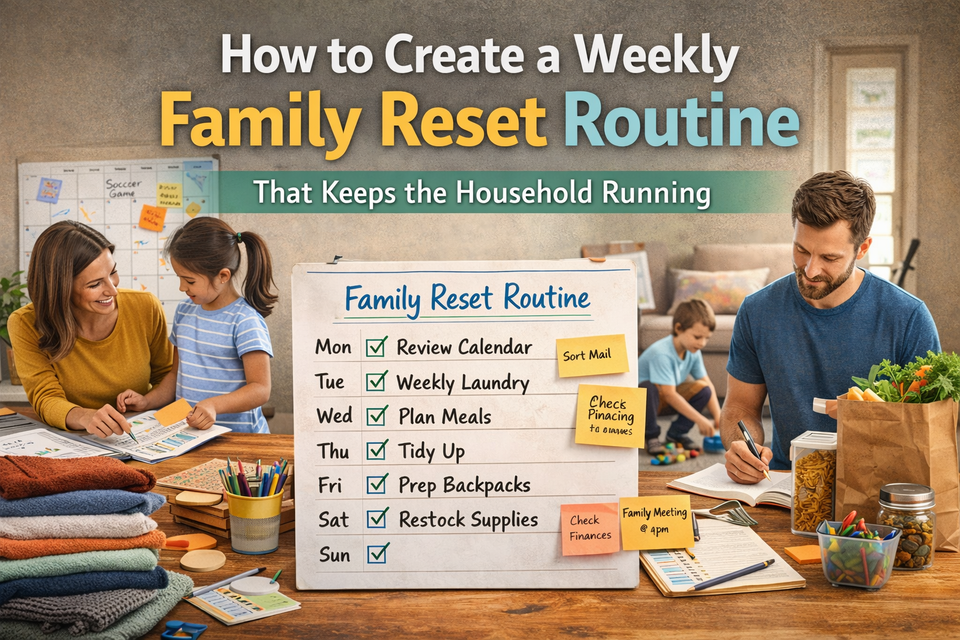
Most weeks don’t fall apart because of one big problem. It’s usually the little things stacking up: a permission slip still in a backpack, no clean gym clothes on Tuesday morning, a calendar conflict nobody mentioned, dishes lingering from the weekend, and that growing pile of random stuff on the counter.
That’s why a weekly family reset can help so much.
Not because it turns your home into a perfectly organized machine. And not because every week will suddenly run smoothly. But because taking 30 to 60 minutes to look ahead, clear a few pressure points, and get everyone on the same page can make the next few days feel a lot more manageable.
The key is keeping it realistic.
This is not a six-hour Sunday overhaul. It’s a short reset you can do on Sunday evening or Monday after dinner that helps your household function better without taking over your whole weekend.
What a weekly family reset is really for
A weekly reset is less about cleaning everything and more about reducing friction.
You’re not trying to "catch up on life." You’re just trying to make Monday, Tuesday, and Wednesday easier.
A good reset helps you:
- spot schedule issues before they become last-minute emergencies
- deal with the clutter that slows everyone down
- get laundry and school items back into circulation
- make sure kids know what’s coming
- start the week with a little less mental noise
That’s it. Simple is the goal.
Keep the routine short and repeatable
If your reset takes too long, it will become one more thing to avoid.
For most families, 30 to 60 minutes is enough. If your house is in a busier season, even 20 focused minutes is better than nothing.
A practical weekly reset usually includes five parts:
- quick clutter reset
- calendar review
- laundry check
- backpack and paper check
- a basic plan for the next few days
You do not need to do these perfectly. You just need to do them consistently enough to notice a difference.
Step 1: Do a quick clutter reset in the highest-traffic areas
Start where your family actually feels the chaos most.
Usually that means:
- kitchen counters
- dining table
- entryway or mudroom
- living room
- school drop zone
Set a timer for 10 to 15 minutes and focus on visible clutter only. Don’t open storage bins. Don’t start reorganizing a closet. Don’t turn this into a deep-cleaning session.
Try this simple method:
- throw away obvious trash
- return dishes to the kitchen
- put shoes, coats, and bags back where they belong
- gather loose papers into one pile
- put random items in a basket to deal with later
This alone can make the house feel calmer.
Real Talk
A weekly reset is not the time to make detailed decisions about every mystery item in your home. If you get stuck sorting old mail, untangling cords, or asking whose water bottle this is for the fifth time, the reset will drag on and everybody will lose steam.
Visible progress matters more than perfect sorting.
Step 2: Review the calendar with the next few days in mind
This is one of the most important parts of the reset because it prevents the kind of stress that comes from surprises.
Look at the family calendar for the next three to seven days.
Check for:
- appointments
- sports practices or games
- after-school activities
- school events
- early dismissals or late starts
- work travel or late meetings
- rides kids need
- anything that requires supplies, forms, or special clothes
If your kids are old enough, involve them here. Pre-teens and teens especially need practice learning to look ahead and manage their own responsibilities.
Ask simple questions like:
- What do you have coming up this week?
- Do you need anything signed?
- Is there anything you have to bring on a specific day?
- Do you know what time you need to leave?
Keep this part brief. You’re not holding a formal family meeting. You’re just making sure everyone has the same basic information.
Step 3: Do a laundry check, not a laundry marathon
Laundry can easily take over an entire reset if you let it.
The goal is not to wash every single thing in the house. The goal is to make sure the essentials are covered.
Do a quick check for:
- school clothes for the next couple of days
- gym clothes or sports uniforms
- socks and underwear
- towels if you’re running low
- work clothes you need early in the week
Then choose the highest-priority load or two.
That might mean:
- one load of school basics
- one load of sports gear
- one load of towels
If older kids do their own laundry, this is the time to remind them to handle it before the week gets busy.
This approach matters because "do all the laundry" is overwhelming, but "make sure everyone has what they need by Tuesday" is doable.
Step 4: Check backpacks, papers, and school gear
This step saves a surprising number of rough mornings.
Take 5 to 10 minutes to go through the stuff that tends to collect during the week.
Look for:
- permission slips
n- forms that need signatures - graded papers you actually want to keep
- empty snack wrappers and random trash
- library books
- chargers or school devices
- water bottles and lunch containers
If your child uses a sports bag, instrument case, or activity tote, check those too.
A simple backpack reset might look like this:
- empty out trash
- return papers that need action to one spot
- plug in devices
- refill anything that should live in the bag
- place the backpack by the door
For teens, you may not need to physically do this for them, but you can still make it part of the routine: "Before bed, do your bag check and plug in your laptop."
Step 5: Make a basic plan for the next few days
This is where the reset starts paying off.
You do not need a color-coded weekly command center. You just need a rough plan that removes some decision fatigue.
Focus on a few practical questions:
- What are we eating in the next two or three days?
- Does anyone need a packed lunch, snacks, or team food?
- What morning will be the tightest?
- Is there anything we can prep now?
- Who is driving where?
Your plan can be very simple.
For example:
- Monday dinner: pasta and salad
- Tuesday dinner: tacos
- Wednesday dinner: leftovers or freezer meal
- Put frozen meat in the fridge
- Set out practice clothes for Tuesday
- Confirm grandma is picking up after school Wednesday
That small amount of planning often prevents the last-minute scramble that makes weekdays feel harder than they need to.
A sample 45-minute weekly reset
If it helps, here’s what this might look like in real life:
10 minutes: Clear counters, table, entryway, and living room clutter
10 minutes: Review family calendar and talk through the next few days
10 minutes: Start one load of priority laundry and gather another if needed
10 minutes: Check backpacks, papers, lunch boxes, and devices
5 minutes: Make a simple meal and logistics plan for the next few days
If you have younger kids, you may do more of this yourself.
If you have older kids, assign small jobs like:
- empty your backpack
- plug in your device
- bring down laundry
- refill your water bottle station
- check the calendar for your activities
Not every family member has to love the routine. They just need to know it happens.
How to make the routine easier to stick with
The best weekly reset is the one your family can repeat, even during busy seasons.
A few ways to keep it realistic:
Choose a consistent time
Sunday evening works for many families, but Monday after dinner can work just as well. Pick the time that matches your actual life, not the one that sounds most organized.
Keep a short checklist
A simple written list prevents you from forgetting the same things every week and makes the routine easier to hand off or share.
Lower the bar on hard weeks
If you’ve had a full weekend, a sick kid, or a packed Monday, do a mini reset instead:
- review the calendar
- check backpacks
- start one load of laundry
- clear the kitchen counter
That still counts.
Don’t add too much
Once a reset starts expanding into meal prep, deep cleaning, organizing drawers, and catching up on every unfinished task, it becomes exhausting. Protect the routine by keeping it focused.
Common mistakes that make resets feel harder
If your weekly reset never seems to stick, it may not be because you lack discipline. It may just be trying to do too much.
Watch for these common problems:
- expecting the whole house to be cleaned
- trying to solve every organization issue at once
- doing it alone when kids are old enough to help
- skipping the calendar review and only focusing on chores
- making the routine so long that everyone resists it
A reset should support your week, not drain all your energy before it starts.
What this looks like in a normal family
In many homes, a weekly reset is not peaceful or picture-perfect.
It might happen while someone is finishing homework, another kid is looking for cleats, and you’re reminding everyone for the third time to bring dishes to the sink. That still counts.
It might mean the laundry gets started but not folded until the next day. It might mean the counters are cleared even though the upstairs bedrooms are a mess. It might mean you only planned dinners through Wednesday.
That still helps.
The point of a weekly family reset is not to create an ideal home. It’s to create enough order that daily life runs with a little less stress.
Conclusion
A good weekly family reset is small on purpose.
It clears the obvious clutter, helps everyone look ahead, gets essentials back in place, and gives the next few days a little structure. That may not sound dramatic, but in a busy household, those small resets can make a real difference.
If you’ve been feeling like every week starts behind, this is a good place to begin. Keep it short. Keep it practical. And let it be a routine that helps your family function better, not one more standard to live up to.