
How to Create a Family Chore System Teens Will Actually Follow
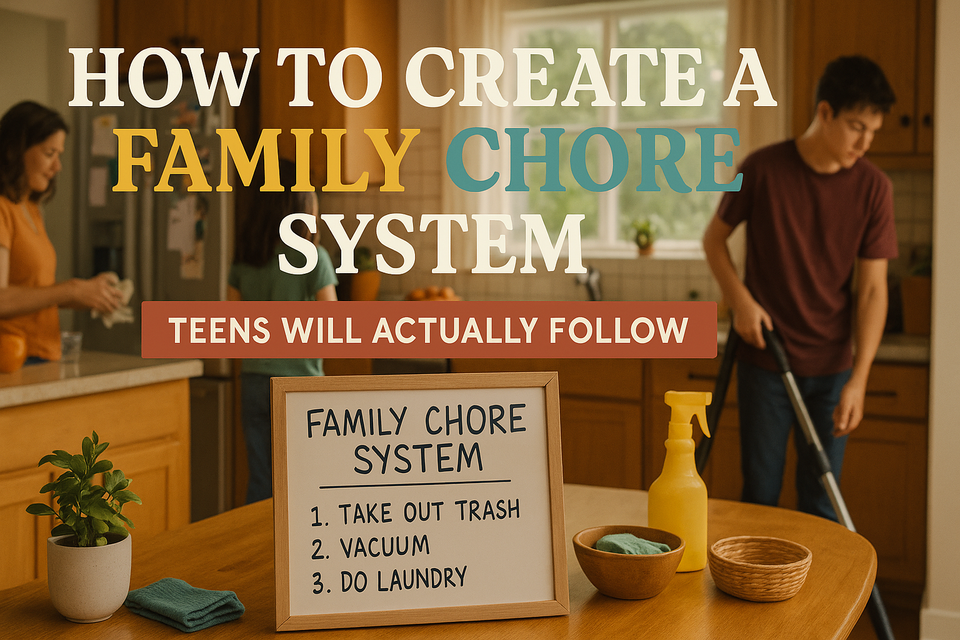
If you have a teen at home, you probably already know this: the hardest part of chores usually isn’t the chore itself. It’s the reminding, the negotiating, the eye rolls, and the feeling that you somehow became the household manager for capable people who also live there.
Most parents don’t need a perfect chore chart. They need a system that works on a busy Tuesday, after practice, between homework, dinner, and everyone being a little tired.
The good news is that teens are usually more capable than they get credit for. The problem is that many chore systems are either too vague, too parent-dependent, or too complicated to keep up with. A better approach is low-drama and low-maintenance: clear jobs, clear timing, and less chasing.
Here’s how to build a family chore system teens are more likely to actually follow.
Start with the real goal
Before assigning anything, it helps to be honest about what you’re trying to create.
For most families, the goal is not:
- a spotless house
- perfectly cheerful participation
- kids who love unloading the dishwasher
The real goal is usually this:
- everyone contributes
- the house runs more smoothly
- parents are not carrying the entire mental load
- teens learn basic life responsibility
That shift matters. When the goal is contribution instead of perfection, your system gets simpler and more realistic.
Keep the system simple enough to survive real life
If your chore setup requires color coding, daily tracking, constant supervision, and a weekly family summit, it probably won’t last long.
Teens do better with systems that are easy to remember and easy to repeat.
A solid low-maintenance setup usually includes just three parts:
-
Daily baseline chores
Small non-negotiable tasks that keep the house functional. -
Weekly reset chores
A few bigger jobs that happen on a set day. -
Personal responsibility chores
Tasks tied to their own stuff, space, and schedule.
That’s it. You do not need 27 rotating categories.
Give each teen a short list of fixed responsibilities
One reason chore systems fall apart is that kids never know what counts, what matters, or when they’re supposed to do it.
Instead of assigning random chores on the fly, give each teen a short, fixed list.
For example:
Daily baseline
- Load or unload the dishwasher
- Wipe kitchen counters after dinner
- Take out trash if full
- Feed pets
Weekly reset
- Vacuum one common area
- Clean their bathroom or shared bathroom zone
- Do one load of their own laundry start to finish
Personal responsibility
- Keep bedroom floor clear enough to vacuum
- Put sports gear, shoes, and backpacks away
- Manage school lunch containers, water bottles, and dirty clothes
The exact chores matter less than the clarity. A teen is much more likely to follow through when they know, “These are my jobs,” instead of waiting to be told what to do.
Tie chores to routine, not mood
A common mistake is treating chores like optional tasks that happen whenever everyone feels cooperative.
That usually leads to delays, arguments, and parents repeating the same reminder six times.
Instead, connect chores to regular parts of the day or week.
Examples:
- Dishwasher gets emptied before school or before leaving for activities
- Kitchen cleanup happens right after dinner
- Trash goes out every evening if needed
- Saturday morning is weekly reset time
- Laundry happens on one assigned day
When chores are attached to a routine, they stop feeling like surprise requests. They become part of how the house works.
Make expectations specific
Teens are very good at finding loopholes in vague instructions. To be fair, vague instructions are hard to follow.
“Clean the kitchen” can mean very different things to different people.
Try being more specific:
- “Load all dishes, wipe counters, and check the floor for crumbs.”
- “Take the bathroom trash, wipe the sink, and scrub the toilet.”
- “Finish your laundry means wash, dry, fold, and put away.”
This is not about micromanaging. It’s about removing confusion.
If you find yourself saying, “You know what I meant,” that’s usually a sign the system needs clearer definitions.
Use a visible system so you’re not the system
If all chore information lives in your head, you stay in charge of remembering, assigning, checking, and following up. That’s exhausting.
A visible system helps everyone know what needs to happen without relying on you to announce it.
You can use:
- a simple whiteboard in the kitchen
- a shared family notes app
- a printed checklist on the fridge
- a dry-erase weekly routine sheet
Keep it basic. For teens, simple is better than fancy.
A whiteboard might include:
- each teen’s fixed chores
- what “done” means
- weekly reset day
- any rotating extra job for the week
The goal is not to create a perfect command center. The goal is fewer verbal reminders.
Build in ownership, not constant supervision
Teens are more likely to cooperate when they feel some control instead of feeling managed all the time.
You can keep expectations firm while giving them some choice.
For example:
- “You need to finish your laundry by Sunday night. I don’t care if you do it Friday or Sunday afternoon.”
- “One person handles dishes, one person handles trash. Decide who wants what this week.”
- “Your room needs to be floor-clear and dirty dishes out by noon Saturday.”
This works well because it protects the standard without forcing parents to manage every step.
Real Talk: fewer reminders usually starts with a reset
If chores have been inconsistent for a while, don’t expect a brand-new system to magically work overnight.
You may need a short reset period where you explain the plan, repeat expectations, and follow through more consistently than usual.
That does not mean the system is failing. It means you’re changing habits.
A calm reset conversation might sound like this:
“I don’t want to keep nagging, and I know you don’t want to be nagged. We need a better system. Everyone in the house is going to have a few regular jobs, and the goal is less arguing and more clarity.”
That framing matters. Teens respond better when the system is presented as a household solution, not a punishment.
Decide in advance what happens when chores don’t get done
This is where many parents get stuck. They have expectations, but no plan for what happens when those expectations are ignored.
Try to keep consequences connected, calm, and predictable.
Examples:
- If laundry isn’t done, they manage the inconvenience of not having favorite clothes available.
- If dishes are skipped, screen time or driving privileges pause until the task is complete.
- If shared-space chores are ignored, the teen handles that job first before social plans.
What helps most is consistency, not intensity.
You do not need a dramatic consequence every time. You need a pattern your teen can count on.
Don’t assign every chore based on fairness in the moment
Parents often get pulled into debates about what is fair.
- “Why do I always do the dishwasher?”
- “He has less homework than I do.”
- “That’s not my mess.”
Some flexibility is fine, especially during a hard week. But if fairness gets renegotiated every day, the system turns into a courtroom.
A better approach is to aim for generally fair over time, not perfectly equal every single day.
You might say:
- “We’re not going to debate each task every night.”
- “If something needs adjusting, we’ll talk about it on Sunday.”
- “The goal is that everyone contributes in a way that works overall.”
That keeps small complaints from becoming daily power struggles.
Have a quick weekly check-in
You do not need a long family meeting. A five- to ten-minute check-in is enough.
Use it to ask:
- What worked this week?
- What kept getting missed?
- Does anything need to rotate or change?
- Are the expectations still clear?
This gives teens a chance to speak up without turning every missed chore into a live argument in the kitchen.
It also helps you notice when the problem is the system, not laziness. Sometimes a chore is poorly timed, unclear, or unrealistic during a sports-heavy season.
Match chores to age and actual ability
Teens can do much more than many families expect, but they still need tasks that fit their maturity and schedule.
A 13-year-old and a 17-year-old may not carry the same level of responsibility.
Good teen chores often include:
- dishes
- trash and recycling
- pet care
- laundry
- bathroom cleaning
- vacuuming
- meal prep support
- lawn or outdoor help
- managing their own school and sports clutter
As they get older, responsibilities can expand naturally. Older teens can often handle more independent tasks, especially those that directly prepare them for adult life.
Focus on contribution, not performance
If every chore gets inspected like a military drill, teens may give up or resist more.
Of course standards matter. But there’s a difference between teaching and nitpicking.
If the bathroom is cleaned but not exactly how you would do it, ask yourself:
- Is it actually done?
- Is it sanitary and acceptable?
- Does this need correction, or just practice?
Sometimes “good enough and done” is better for the family than “perfect but fought over.”
A simple sample chore system
If you want a starting point, here’s one realistic version for a family with teens:
Every day
- Teen 1: unload dishwasher, feed dog
- Teen 2: wipe counters, take out trash if full
- Both: shoes, backpacks, dishes, and gear put away before bed
Every week
- Saturday morning: 30-minute house reset
- Teen 1: vacuum living room and hallway, do own laundry
- Teen 2: clean shared bathroom, wash bedding
Ongoing personal responsibilities
- Keep bedroom reasonably clear
- Bring laundry to hamper
- Put sports equipment away
- Empty lunch containers and refill water bottles
If something is missed
- Task gets done before screens, rides, or plans
- No arguing in the moment; concerns can be raised at the weekly check-in
It’s not fancy, but that’s part of why it works.
What makes a chore system stick
In most families, chore success has less to do with motivation and more to do with structure.
Teens are more likely to follow through when:
- they know exactly what they’re responsible for
- the chores happen at predictable times
- expectations are visible
- they have some ownership over how tasks get done
- consequences are calm and consistent
- parents are not re-explaining everything every day
That’s the real win: not perfect compliance, but a house that runs with less friction.
Conclusion
A chore system teens will actually follow is usually not the most detailed one. It’s the one that makes expectations obvious, keeps reminders to a minimum, and gives older kids a real role in how the home functions.
You do not need to turn your house into a boot camp to teach responsibility. In fact, a simpler, calmer system often works better. Clear jobs, clear timing, and steady follow-through go a long way.
And if it takes a few weeks to settle in, that’s normal. The goal is not chore perfection. It’s building a family rhythm where everyone contributes and one person isn’t carrying the whole load alone.